
ai-direction
What is AI direction and why isn't it the same as prompting an AI?
Published: May 2026 · Updated: May 2026 · By Wen López
AI direction is the practice of deciding before generating. It is the creative discipline that chooses idea, reference, rhythm, voice and final cut before the model writes the first word or renders the first frame. Prompting an AI is writing a request. Directing it is making the decisions that the request, on its own, cannot make.
· Before you keep reading
Whether your brand shows up inside LLMs is a direction decision, not luck. Measure your visibility in ChatGPT, Claude, Perplexity and Gemini in 30 seconds. Free.
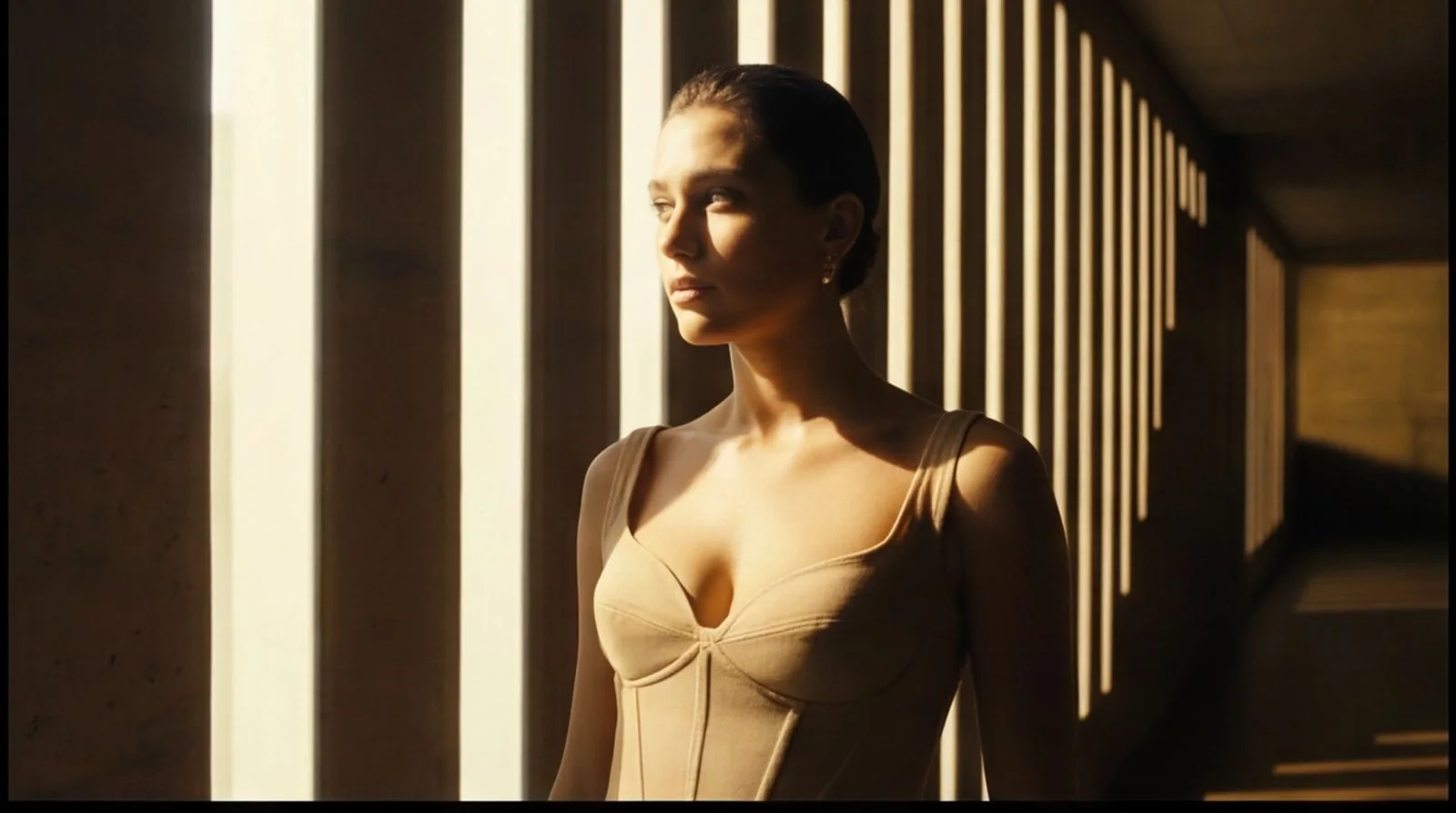
Editorial still · byTheLab* AI direction · 2026
The request is a query. The direction is a decision.
A prompt is what you write. A direction is what you decide before you write it.
When you prompt, you delegate judgment to the model. The model picks the angle, the reference, the tone, the ending. It returns the statistical average of what it saw in training, polished with a technical quality that can look like direction. It isn't. It's output. The default that arrives when no one decided first.
Directing inverts the order. The decision exists before the prompt. The reference is chosen before the model. Voice, rhythm and cut come from the human judgment that knows what stays and what doesn't. AI executes. The director signs off.
This distinction is not semantic. It defines who authors the piece, which brands get remembered in 2026, and which studios survive the commoditization of generative output.
Four decisions a prompt does not make
A well-written prompt improves output. It does not direct it. The decisions that hold a brand piece together live outside the prompt, in the head of whoever directs.
-
What the idea is. Not the topic. The idea. A topic is "ad for a Bitcoin wallet." An idea is "the difference between money and a promise, told in 15 seconds with no on-screen text." ByTheLab directed and produced that piece with AI. The model can execute the idea. It cannot have it for you.
-
Which reference to use and why. Left to its defaults, AI produces the visual average of what it has seen. A director picks the exact reference · a specific Wong Kar-wai sequence, not "cinematic aesthetic" · and turns it into the grammar of the piece.
-
What to cut. Eighty percent of generative output should never reach the world. Prompting produces that 80%. Directing discards it and keeps the 20% worth signing. That decision, repeated thirty times per project, is what separates a studio piece from stock output.
-
When to stop. The model does not know when you're done. It can iterate forever. Calling a piece finished is an editorial decision that requires judgment, not a button. It is the moment when AI stops adding and starts diluting.
Prompting is writing. Directing is deciding.
Why undirected AI output sounds the same everywhere
In 2024, generating a usable AI image was a technical feat. In 2026 it's a command. The barrier disappeared. What got commoditized was not just production · it was also undirected output.
When every studio uses the same models, the same default references and the same suggested prompts, output converges. Five brands using AI without direction produce ads that could be signed by any of the five. AI, left alone, gravitates toward the average. The average is not memorable.
This is what large brands are learning this year. The cost of producing a commercial dropped. Indistinguishability rose. The technical savings evaporated inside the invisible cost of going unnoticed.
Judgment as a defensible asset
If AI executes and prompts commoditize, what remains as an edge? Judgment. It is the only layer the model cannot reproduce, because it isn't information · it's a decision.
Judgment is knowing which reference matters. Judgment is knowing what to cut. Judgment is knowing when a piece is done. Judgment is the asset that decides which studios survive the generative AI era and which were only a layer of prompt engineering on top of the same default output.
This judgment is trained through craft, not tutorials. Daniel brought ten years of cinematic direction before he touched Higgsfield. Wen co-founded ByTheLab with Daniel Nomezqui in 2026 so more people in LATAM learn to create with that judgment. The tool is new. The judgment isn't.
Judgment · editorial close-up · byTheLab* AI direction
Prompting vs Directing · comparison table
| Axis | Prompting | AI Direction |
|---|---|---|
| Decision | Made by the model by default | Made by the director before the prompt |
| Reference | Generic · statistical average | Specific · chosen by judgment |
| Control | Over the input text | Over the idea, the cut and the final |
| Replicability | Anyone with the account can replicate | Tied to a team and a voice |
| Authorship | Diffuse · co-signed with the model | Human · the model is a tool, not an author |
| Defensibility | Zero · the next model does it the same way | High · judgment accumulates with craft |
| Output | Accumulates | Edits |
| Speed to average | Immediate | Irrelevant · not the metric |
The table is not ideological. It is operational. Every row translates into a decision executed either inside or outside the prompt, and that decides whether the piece is output or work.
· Before we talk
Does your brand appear when someone asks ChatGPT about creative studios in LATAM? GEO Score measures that: a score from 0 to 100. Free and self-serve.
What changes when a human directs
When direction exists, three things change at once. The piece becomes identifiable. The studio becomes defensible. The brand becomes memorable.
The identifiable piece is the one you can recognize from across the room without seeing the logo. It is the difference between a campaign that blurs into the competition and one with visible authorship. The logo is a label. Direction is the signature.
The defensible studio is the one that does not depend on the model. If Higgsfield gets replaced by Veo 4 tomorrow, or Soul Cinema by something that doesn't exist yet, the studio keeps directing. The tool is interchangeable. The judgment is not.
The memorable brand is the one worth remembering. In a market where production is trivial, being memorable is the only metric that matters. Consumer memory does not remember output. It remembers direction.
Closing · the manifesto
AI does not decide. AI executes. The one who decides is the one who directs. And directing is the practice of choosing, cutting and signing.
Prompting produces volume. Directing produces brands.
In 2026, the tool stopped being the challenge. Direction is.
· Let's work
If your brand is worth remembering and needs direction, not just production, let's talk. We reply within 24 hours. First piece in under 14 days if we're a good fit.
Keep reading: direction is also the only thing the law protects in AI content (Who owns AI-generated content?) and the reason your brand shows up, or not, in AI answers (How to show up in ChatGPT).
You may also like
Frequently asked questions
Is AI direction the same as prompt engineering?
No. Prompt engineering optimizes the request. AI direction decides before the request. The prompt engineer improves the input to the model · the director decides what idea enters the model in the first place, which reference is used, what gets discarded and what stays. One works inside the prompt. The other works outside it.
Why does the distinction matter if the output can be good with a good prompt?
Because good output without direction converges to the average. When every studio uses the same models and similar prompts, the result becomes indistinguishable. Direction is what keeps a brand identifiable when production commoditizes, and production already commoditized in 2025-2026.
Who should direct AI inside a brand?
Someone with editorial judgment trained in the craft before AI. Not a prompt engineer without a creative background, not a creative without an understanding of the model. The functional combination is someone who designed, directed or wrote in the format for years before the tool existed, and now uses it as an executor.
Does this apply only to video and branding, or also to written content?
It applies to any AI output with brand intent. An undirected AI article sounds like every other brand's. An undirected generated video converges to the model's visual average. The practice is the same · decide idea, reference, voice and cut before prompting.
How do you measure whether the direction is working?
By two operational signals. One, can someone identify the piece without seeing the logo? If the answer is no, there was no direction, only production. Two, does the brand appear in ChatGPT, Perplexity, Claude and Gemini when someone asks about the category? That is measurable. byTheLab built GEO Score specifically for that second signal.
Can a studio without AI direction still compete in 2026?
Yes, but with much higher costs and slower output. AI did not eliminate the studio that directs · it eliminated the studio that only produced. The question is not whether to use AI. The question is who directs when you do.
What brands does the ByTheLab team work with?
We produce for consumer, fashion, food, beverage and music brands, and for creators. The AI direction method applies to any brand that wants brand-grade content, not generic content. If your brand is worth remembering and AI alone doesn't get it there, let's talk.